5 minutes, 36 seconds
-703 Ver 0 comentario 0 me gusta 0 Reviews
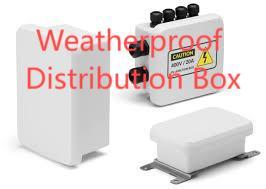
In outdoor power installations, thoughtful enclosure selection prevents many field failures — a well-engineered Weatherproof Distribution Box deployed with correct orientation and sealing avoids moisture-related shorts and corrosion, and specifying a Weatherproof Distribution Box with modular interiors and serviceable access simplifies maintenance while extending equipment life. Early coordination between design, procurement, and operations ensures the chosen enclosure meets electrical load, environmental exposure, and future expansion needs.
Outdoor enclosures confront rain, wind-driven dust, UV radiation, and temperature swings. Start by defining the site environment: coastal sites need high corrosion resistance, industrial zones may require chemical-resistant finishes, and desert locations demand dust ingress control. Use IP and NEMA ratings as baseline targets—higher numbers reflect better protection against water and particulates. Also ask suppliers for accelerated aging, salt-spray, and UV-resistance test reports so you can compare real-world durability rather than relying solely on marketing claims.
Material choice determines how an enclosure ages. Thermoplastics with UV stabilizers resist cracking and are inherently corrosion-proof; powder-coated aluminum provides stiffness and aids heat dissipation; stainless steel delivers the best chemical resistance. Pay attention to fasteners, hinges, and seals—stainless or plated screws, continuous hinges, and captive fasteners reduce service damage and help keep doors aligned. Protective finishes, sacrificial coatings, and passivation processes further extend life in aggressive environments.
Heat is a leading cause of premature component failure. Consider the heat output of breakers, transformers, and control equipment when planning interior layout. Passive strategies include conductive backplates and strategic component placement to promote natural convection. For higher heat loads, filtered fans, heat exchangers, or ventilated compartments may be necessary. Compartmentalization—separating power conductors from sensitive controls—limits thermal interaction and simplifies troubleshooting while supporting more reliable thermal control.
Sealing is a system effort: match cable glands to the enclosure’s ingress rating and use strain relief to prevent cable movement from compromising seals. Where possible, orient cable entries so gravity assists drainage and add drip edges or sloped tops to reduce water pooling near seams. Use gaskets with sufficient compression margin and select breathable vents or desiccant holders where condensation is a frequent concern. Proper routing and securing of internal cables prevents accidental seal breaches during maintenance.
Robust performance starts at installation. Mount enclosures on stable, vibration-free surfaces with corrosion-resistant fixings, and leave service clearances for technicians. During commissioning, check seal compression, verify gland torque, and perform insulation resistance tests to confirm wiring integrity. Document phase rotation, breaker settings, and wiring diagrams. A commissioning report with photographs and serial numbers speeds future troubleshooting and supports warranty claims if defects appear.
Routine inspections are essential. Check gaskets for hardening, confirm fasteners remain captive and corrosion-free, and clear any debris from vents or drainage channels. Retorque power connections after initial thermal cycles and schedule predictable replacement of consumables like desiccants and gaskets before they fail. Keep a compact spare kit with common gland sizes, gaskets, and fasteners at each site to minimize downtime. A simple maintenance log helps spot trends and guides adjustments to inspection frequency.
Accessories—filtered vents, surge protection devices, meter sockets, and prewired subassemblies—transform a basic enclosure into a tailored solution that reduces field labor and improves reliability. Modular interiors let you add breakers or communications modules without replacing the housing. When evaluating total cost, include lifecycle factors such as reduced repainting, longer maintenance intervals, and easier upgrades; these often outweigh modest upfront price differences.
Selecting the right outdoor distribution enclosure is a multidisciplinary decision that balances electrical requirements, environmental defenses, thermal design, and maintainability. By specifying appropriate materials, incorporating effective sealing and drainage, and committing to a realistic maintenance plan, teams can ensure long-lasting, reliable power distribution in even the harshest conditions. For additional technical guidance and real-world examples, please visit https://www.nante.com/news/industry-news/weatherproof-distribution-boxes-features-applications-future-trends-and-more.html


En nuestra comunidad creemos en el poder de las conexiones. Nuestra plataforma es más que un simple sitio de redes sociales; es una comunidad vibrante donde personas de diversos orígenes se reúnen para compartir, conectarse y prosperar.
Nos dedicamos a fomentar la creatividad, construir comunidades sólidas y crear conciencia a escala global.




Aquí puede ver una lista de administradores agregados por usted para este documento.