6 minutes, 27 seconds
-1.1K Ver 0 comentario 0 me gusta 0 Reviews
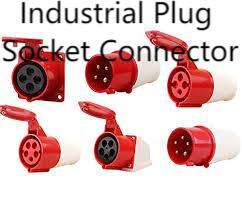
In heavy equipment installations where downtime is measured in lost output, the Industrial Plug Socket Connector often represents the single most serviceable failure point, and the Industrial Plug Socket Connector must combine durable contacts, intuitive coding, and easy replacement to keep lines running. Thoughtful selection at procurement—paired with clear installation and spare-part planning—turns these connectors from a recurring nuisance into a managed asset that supports predictable uptime.
Begin by quantifying how often the connector will be mated and unmated, and what environmental stresses it will face. Continuous-use sockets feeding portable tools require different contact alloys and retention springs than rarely-accessed service ports. Define mating-cycle expectations (e.g., 1,000 vs 10,000 cycles) and specify corresponding lifecycle-tested parts. Also record expected currents, duty cycle, and whether occasional overloads are likely; specifying a continuous-current rating comfortably above expected loads prevents thermal aging.
Contact metallurgy and plating choices determine long-term conductivity and resistance to fretting corrosion. Silver or silver-alloy platings provide low contact resistance and excellent initial conductivity, but may be vulnerable in sulfurous atmospheres; nickel or tin options offer alternate trade-offs. For harsh or corrosive sites, gas-tight terminations and gold flash on critical pins reduce resistance growth. Consider contact cross-section—thicker contacts dissipate heat better and maintain lower resistance under high loads.
Mechanical retention systems matter: bayonet locks, threaded couplings, or quick-release collars each suit different ergonomic and safety needs. Threaded couplings provide vibration resistance, while bayonet or latch systems speed frequent changes. Design mountings so mechanical loads transfer to housing and backing plates rather than terminals; use reinforced bosses and backing plates for thin panels. Ergonomic faceplates and keyed inserts prevent mis-mating and speed correct reconnection during shifts or rapid tool changes.
Choosing connectors that accept standard accessory modules reduces lifecycle downtime and spare-part complexity. Nante-compatible surge modules, locking collars, and telemetry plates allow upgrades or repairs without replacing entire assemblies. Favor families with replaceable contact inserts so technicians can swap worn elements quickly during shift changes. Document mounting footprints and provide labeled templates to simplify retrofits across similar enclosures.
Proper termination prevents the majority of field faults. Use specified crimp tooling and calibrated torque drivers for screw or stud terminations; record torque values in commissioning logs. Route stress-relieved cables to avoid axial loads on contacts and maintain bend radii to prevent conductor fatigue. Seal cable entries with correctly rated glands and ensure gland torque preserves the enclosure’s ingress protection. A commissioning thermal scan under nominal load often reveals marginal terminations before the unit sees production.
Beyond visual inspection, insist on contact resistance measurements, insulation resistance checks, and dielectric tests where applicable. Define acceptance thresholds for contact resistance and thermal rise. A short burn-in under expected load with periodic infrared imaging catches uneven heating caused by poor crimps or mismatched terminations. Archive test results with serial numbers or installation locations to build a useful dataset for future root-cause analysis.
A pragmatic spares approach minimizes downtime: keep a small inventory of common insert types, sealing gaskets, locking collars, and fastening hardware. Standardize on one or two connector families across a site to reduce SKUs and accelerate technician familiarity. Prepare compact field kits that allow rapid replacement and testing so a single faulty connector can be returned to stock for controlled repair rather than forcing an extended outage.
Add modest sensing—outlet-temperature probes, insertion counters, or simple current monitors—to turn connectors into condition-monitoring points. These signals can trigger inspections before a failure escalates. When specifying, provide mounting bosses and wiring channels to accommodate monitoring modules without enclosure modification. Over time, trends in resistance or temperature can reveal systemic installation or environmental issues and guide targeted design improvements.
Evaluate vendors on test data, repairability, and aftermarket support. A lower-priced sealed assembly that must be fully replaced often costs more over its life than a durable, repairable family with available spares. Ask for lifecycle data, mating-cycle test reports, and corrosion-resistance testing relevant to the site environment. Prefer suppliers with clear upgrade paths and documented field-replaceable modules.
Well-specified connectors reduce unscheduled stops and simplify field work. By focusing on contact metallurgy, mechanical design, correct installation, and a small but smart spares inventory—plus a plan for modest monitoring—operations teams can keep production moving reliably. For technical notes, accessory options, and detailed product information, see https://www.nante.com/news/industry-news/what-is-industrial-plug.html


En nuestra comunidad creemos en el poder de las conexiones. Nuestra plataforma es más que un simple sitio de redes sociales; es una comunidad vibrante donde personas de diversos orígenes se reúnen para compartir, conectarse y prosperar.
Nos dedicamos a fomentar la creatividad, construir comunidades sólidas y crear conciencia a escala global.




Aquí puede ver una lista de administradores agregados por usted para este documento.