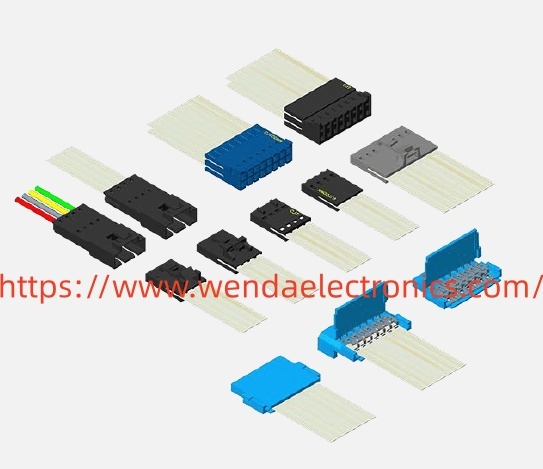
WTB Wire to Board Connector is an electronic connection component that joins individual wires or cable assemblies with a printed circuit. Instead of attaching every conductor directly through soldering, this type of interface creates an organized electrical path between the cable side and the circuit side. The structure can support assembly, maintenance, internal wiring organization, and equipment integration. Wendaelectronics provides connection solutions for manufacturers working with different electronic product structures and application requirements.
The Basic Structure
A typical connector system contains several functional parts that work together. The cable side contains conductive contacts attached to individual wires, while the PCB mounted section provides the corresponding mating interface.
A housing keeps the contacts positioned correctly and helps establish the intended connection arrangement. Depending on the design, additional retention structures can help maintain the connection during normal equipment operation.
The specific structure depends on circuit quantity, wire arrangement, installation direction, available space, and mechanical conditions.
How The Electrical Connection Works
The process begins when each conductor is attached to its corresponding contact. The contacts are then positioned inside the housing according to the required circuit arrangement.
During assembly, the cable side is brought together with the matching interface on the circuit assembly. When the contacts reach their intended positions, conductive surfaces create an electrical path between the wire group and the electronic circuit.
This arrangement provides a defined connection point without requiring every individual wire to be permanently soldered into place.
Why A Detachable Interface Can Be Useful
Electronic equipment may require inspection, servicing, replacement, or assembly adjustments during its operating life.
A detachable interface can allow technicians to separate a cable group from an electronic module when maintenance is required.
It can also support manufacturing processes in which cable assemblies are prepared separately before final equipment assembly.
For systems containing multiple functional sections, a structured connection method can make internal wiring easier to organize.
Managing Internal Cable Routing
Complex electronic equipment may contain numerous cables, sensors, power paths, and control circuits.
A dedicated connection point gives designers a defined location for cables entering or leaving a circuit assembly.
This can help with cable routing during product development. Designers can consider cable direction, enclosure dimensions, component placement, and access requirements together.
For compact equipment, these factors can become particularly important because internal space is often limited.
Contact Arrangement Matters
Different electronic applications require different contact configurations. Engineers may need to consider circuit quantity, conductor dimensions, electrical requirements, mounting direction, and physical space.
The contact layout should correspond with the intended application and assembly process.
Wire preparation is also important. Each conductor needs to match the selected contact and termination method so the completed cable assembly can be produced correctly.
Retention And Mechanical Stability
Electronic products can experience movement during transportation, installation, or normal operation.
A suitable retention structure can help keep the mating components in their intended position.
The appropriate approach depends on the equipment design and expected operating conditions.
Engineers should also consider maintenance requirements. If technicians need regular access to the connection, the design should allow practical disconnection while maintaining suitable retention during normal operation.
Common Electronic Applications
Cable to PCB connections can be used across many electronic product categories.
Examples include household appliances, industrial control equipment, lighting systems, communication equipment, consumer electronics, automation products, and various embedded electronic assemblies.
Each application has different electrical and mechanical conditions.
For manufacturers, component selection should therefore consider the complete product environment, including installation space, operating conditions, cable routing, assembly procedures, and maintenance access.
Supporting Assembly Processes
A structured connection interface can influence how electronic products are assembled.
Instead of individually attaching many wires to separate circuit locations, a prepared cable group can be connected through a designated interface.
This can help manufacturers organize repeated assembly procedures.
The actual manufacturing method depends on the connector structure, cable preparation, soldering process, assembly equipment, and production workflow.
Maintenance And Replacement
Some electronic products are designed to permit component replacement or routine servicing.
A detachable cable interface can make separation more convenient when technicians need to access a circuit module.
After inspection or replacement, the cable group can be reconnected according to the equipment service procedure.
This approach may be useful for products where maintenance access is an important consideration.
Users and technicians should always follow the instructions supplied with the finished equipment.
Supporting Product Design
Connection components should be considered during the early product development stage.
Engineers can evaluate cable direction, circuit placement, installation space, contact requirements, enclosure dimensions, assembly procedures, and maintenance access before finalizing the internal structure.
Early planning can help identify physical conflicts before production begins.
Wendaelectronics works with manufacturers evaluating connection solutions according to their product structure, application requirements, and purchasing plans.
What Buyers Should Prepare
Before contacting a supplier, buyers can prepare information about the intended application.
Useful details may include wire type, conductor size, circuit quantity, mounting direction, available space, mating method, retention expectations, assembly process, and operating conditions.
Manufacturers may also need packaging or customization arrangements when components are purchased for regular production.
Clear requirements allow supplier communication to focus on the actual application rather than general assumptions.
A Practical Solution For Electronic Connections
The purpose of a cable to circuit connection is straightforward, but the component can influence assembly, maintenance, internal organization, and product integration.
A suitable interface creates a defined electrical path while allowing cable groups and electronic modules to remain easier to manage during manufacturing and servicing.
For manufacturers reviewing connection components for appliances, industrial equipment, communication products, consumer electronics, and other applications, the product information at https://www.wendaelectronics.com/product/ can be naturally considered alongside circuit requirements, cable arrangements, assembly procedures, available space, and purchasing plans.
 Lichunyan
7 minutes, 51 seconds
Lichunyan
7 minutes, 51 seconds